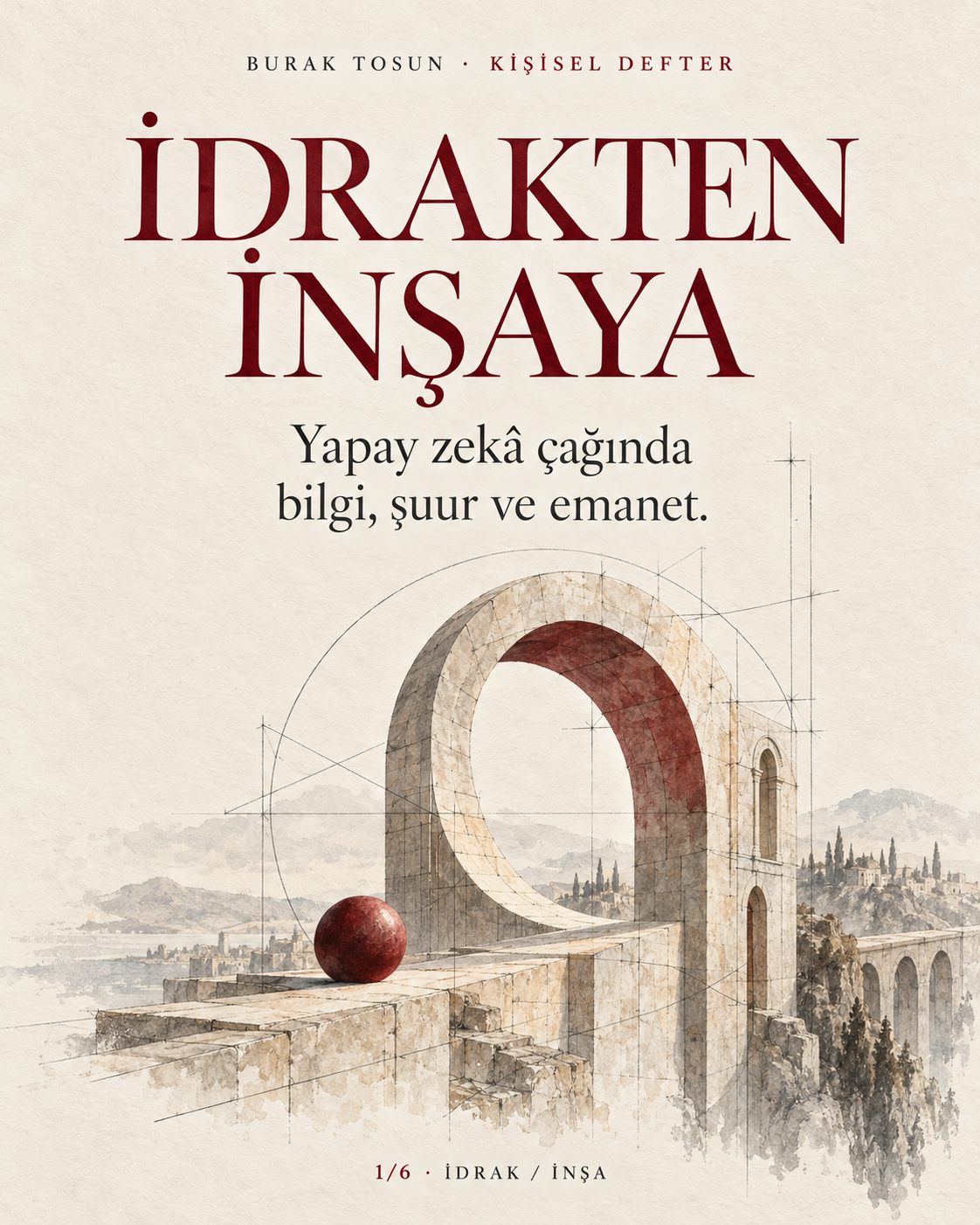
From Understanding to Building: The Meaning of Things, the Trust We Carry
A reflection reaching from Yunus Emre’s call to self-knowledge into the age of artificial intelligence.
We look at an image. We find it beautiful. Then we search for ways to recreate that beauty. Within seconds, artificial intelligence offers us possibilities: a façade, a street, a courtyard, a city.
But how much do we understand the decisions behind the image? Do we know why a window occupies that particular place, why a street has that width, whom a doorway welcomes, or what kind of life a wall protects?
For me, this is where idrak begins: understanding the relationships behind what is visible, and accepting responsibility for what we have understood.
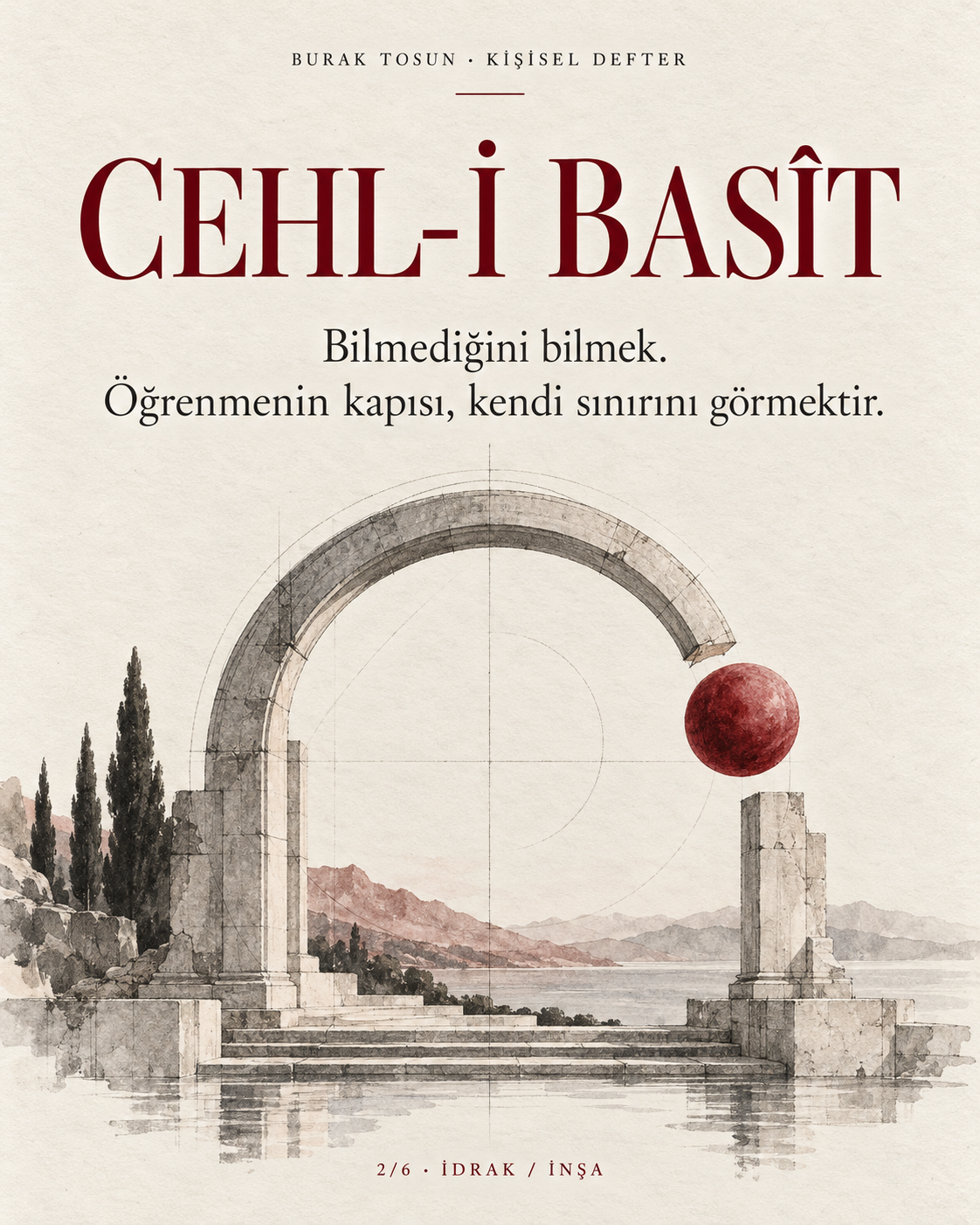
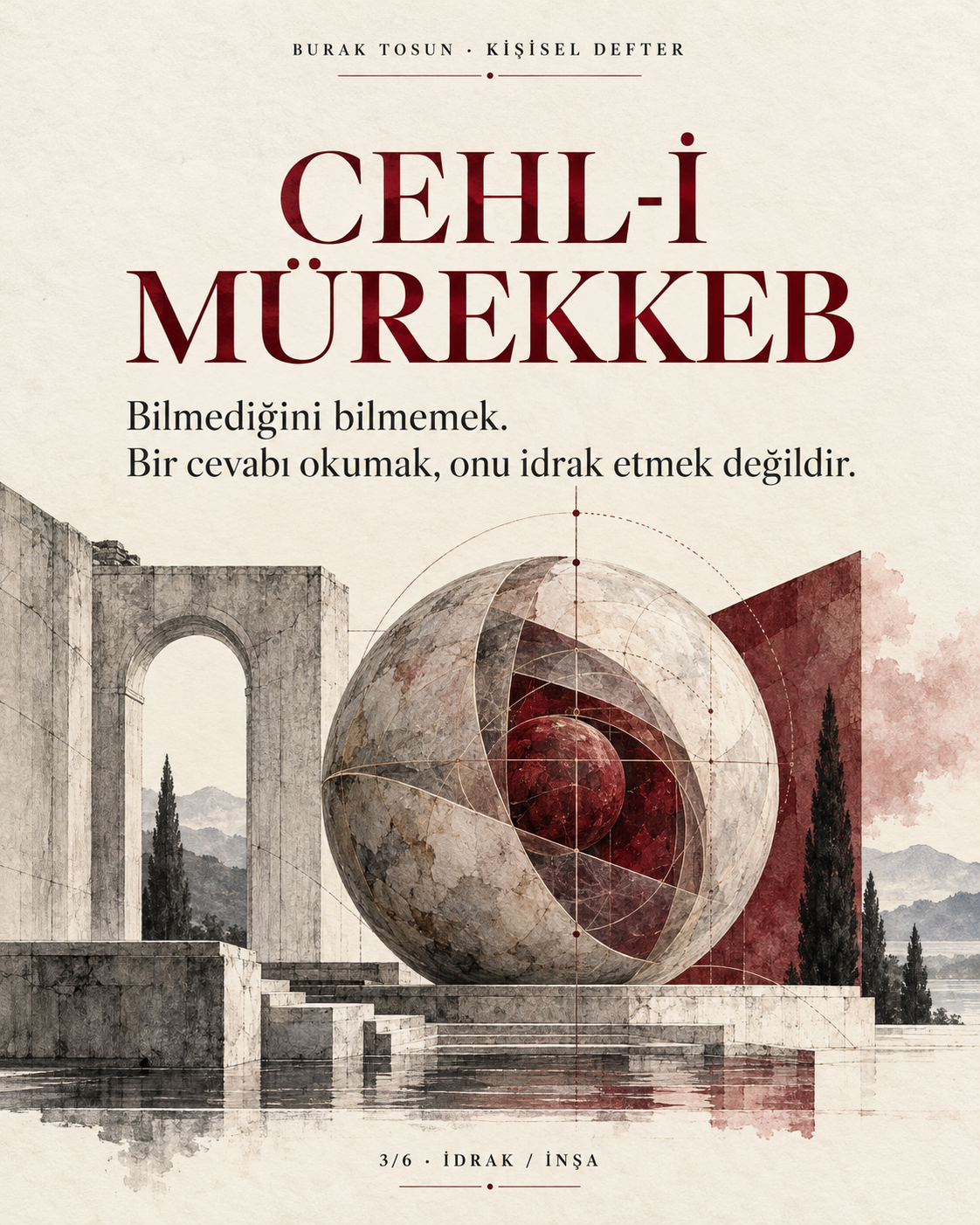
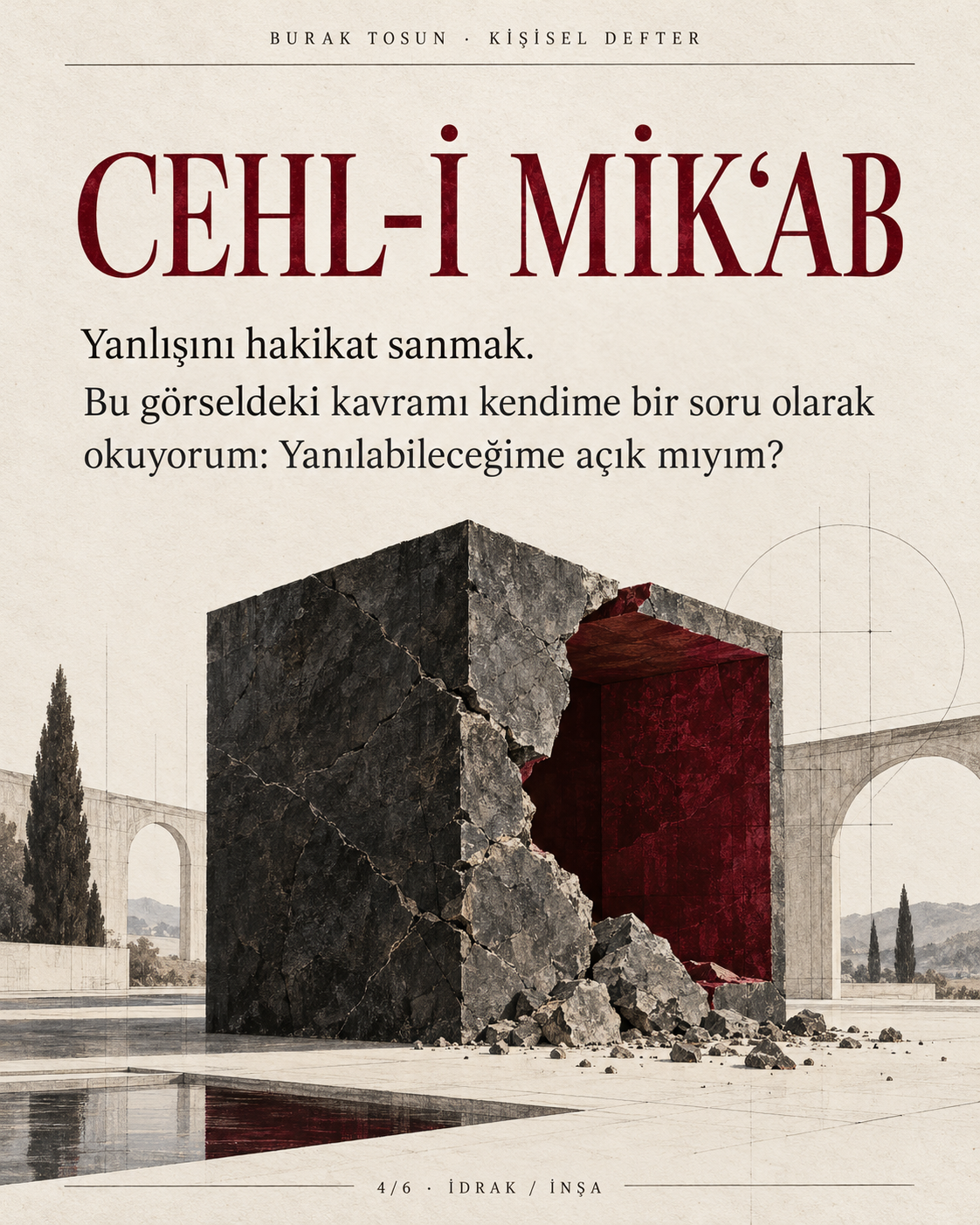
Cehl-i basît, cehl-i mürekkeb, and the expression cehl-i mik‘ab added in the shared illustrations. Before directing these words towards others, I want to turn them towards my own understanding.
In the illustrations’ interpretation, cehl-i basît opens a door to recognising what we do not know. When we acknowledge a gap in our knowledge, we can ask, listen and learn.
Cehl-i mürekkeb occupies a more difficult position: we cannot see the limits of our knowledge. We may confuse having an explanation with understanding the matter itself.
I read the condition described in the illustration as cehl-i mik‘ab as becoming closed around our own error: resisting questions about our judgement and carrying our misunderstanding into the paths of others.
These are not three boxes into which I place people. They are conditions any of us may enter at different moments. I cannot place myself outside them.
Working with artificial intelligence makes this question more visible. A well-written response can give me a feeling of understanding. Yet there may still be a distance between the fluency of its sentences and my own comprehension. If I do not know what supports the answer, or under which conditions it would change, I have yet to examine it through my own judgement.
Here, I remember Yunus Emre. I read his understanding of knowledge as a path towards knowing oneself, and use it to question my own position before today’s tools. As my knowledge grows, how does my relationship with myself change? Can I see my limits more clearly? Does what I learn make me more attentive, more just and more responsible?
These questions have a tangible expression in architecture.
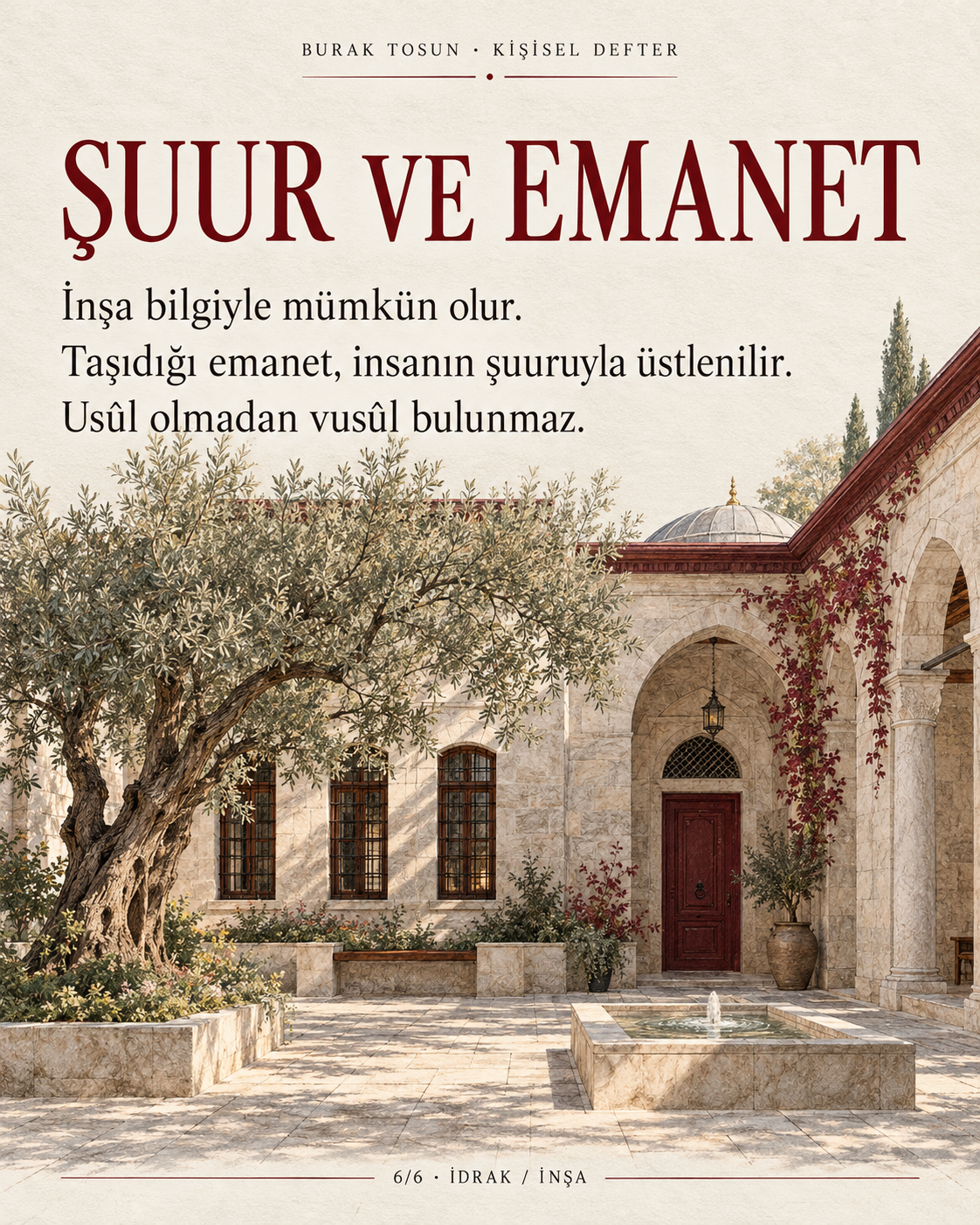
The decisions behind a beautiful image can be developed through knowledge. We study materials, measure, calculate and compare possibilities. But considering the person who will live within those decisions, the rights of a neighbour, the memory of a place and the traces we leave for the future requires şuur: conscious awareness of our responsibilities.
Knowledge makes building possible. Human awareness accepts the trust it carries.
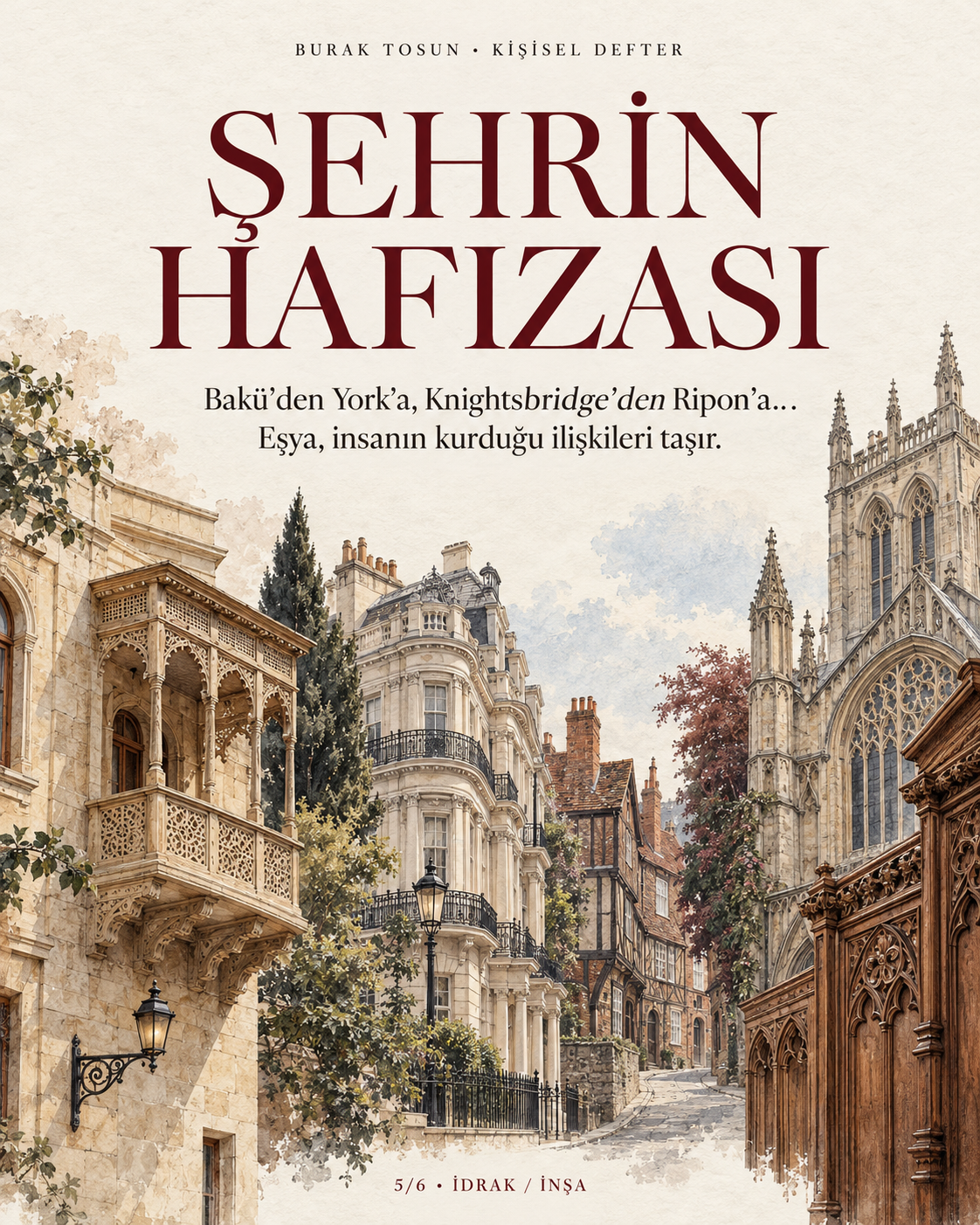
When I remember the streets where we lived around Bakı Soveti in Baku, I see more than façades. The feeling of turning a corner, the shadow of a doorway, the colour of stone and the rhythm of everyday life return to me. Those streets seem to continue speaking within me, even when I am not consciously thinking about them.
I carry a similar feeling when I look at the buildings of Knightsbridge in London or the old streets of York. Each city has its own history, yet each holds traces of the relationships people have formed with time. When I search for beauty only in architectural style, I feel that I miss part of those relationships.
Ripon’s narrow streets and its connection with Lewis Carroll lead me towards the same thought. Even the possibility that a wooden carving in the cathedral touched a writer’s imagination matters to me. Something made by a craftsperson can, years later, open another world in someone else’s mind.
Perhaps this is how the meaning carried by things travels. The attention that begins with the maker finds a different response in the understanding of the person who encounters the work.
This is what I mean when I imagine an entrusted thing speaking to someone prepared to receive it. Seeing requires knowledge, but also attention, humility and a certain readiness. Sometimes a street does not speak to us immediately. As we change, we begin to recognise relationships we could not see before.
I want to remember Turgut Cansever here once again. Thinking of him as an architect who attended the conversations of Elmalılı Hamdi Yazır opens, for me, a connection between learning and building. Reading Cansever, I feel invited to consider the ethical consequences of architectural decisions.
Part of my unease about my country’s experience of the Republic lies here: in the distance between the desire for renewal and the effort to understand the world we inherited. Imitating the past, or closing our eyes to it, can both take us away from the same question: through what method, and with what responsibility, will we build this life?
Looking at the religious and political language of the past quarter-century, I also see a separation between form and meaning. As the visible signs of Muslim identity multiply, we need to ask how justice, competence and entrusted responsibility are expressed in everyday life. I want to direct that question first towards my own work, my own promises and my own relationships.
There is a considerable distance between adding traditional forms to a building and carrying that tradition’s understanding of people and their rights. There is a similar distance between speaking of justice and acting justly when making a decision.
Usûl olmadan vusûl bulunmaz.
There is no arrival without a considered way.
I want to approach artificial intelligence through this same measure: exploring the possibilities it opens, examining their foundations and following the consequences of decisions. Remembering whom my work serves, and upon whom it places a burden.
My direction is to build according to what I understand, and to learn again through building. To attend carefully to things, honour the rights of people and work towards becoming worthy of the trust I carry.
Source notes
Cehl-i mik‘ab is used here as an interpretation presented in the shared illustration, rather than as a claim of an established historical three-part classification. The TDV İslâm Ansiklopedisi records Cansever among those who attended Elmalılı’s conversations. Ripon Cathedral describes the influence of its carvings on Lewis Carroll as a possible, unproven connection.
Visual companion · Turkish captions