A Line to Shetland: Field Notes from Saxa Vord
Shetland notes, from fieldwork at Saxa Vord to misty shores, Skidbladner’s timber hull and everyday encounters.
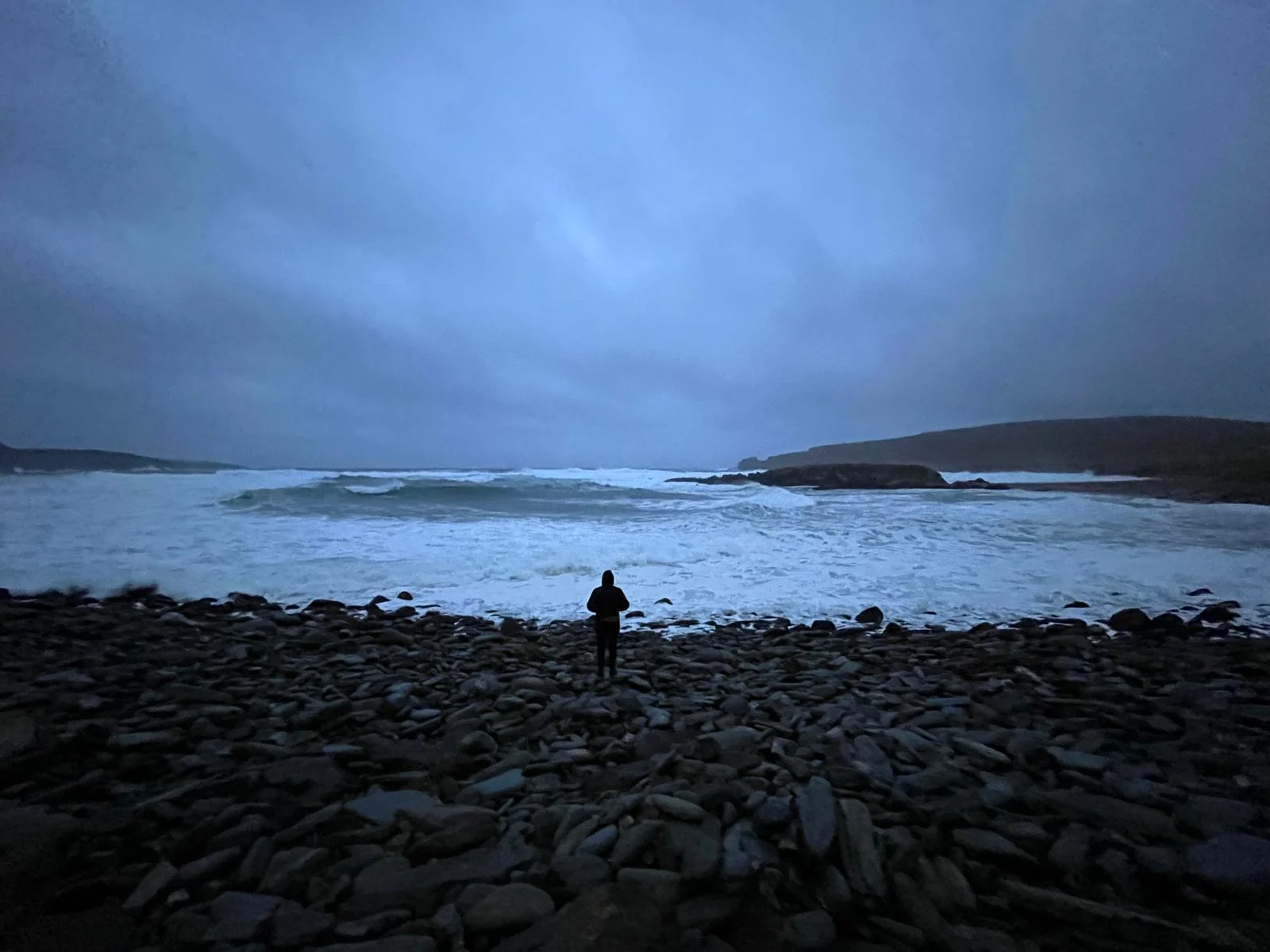
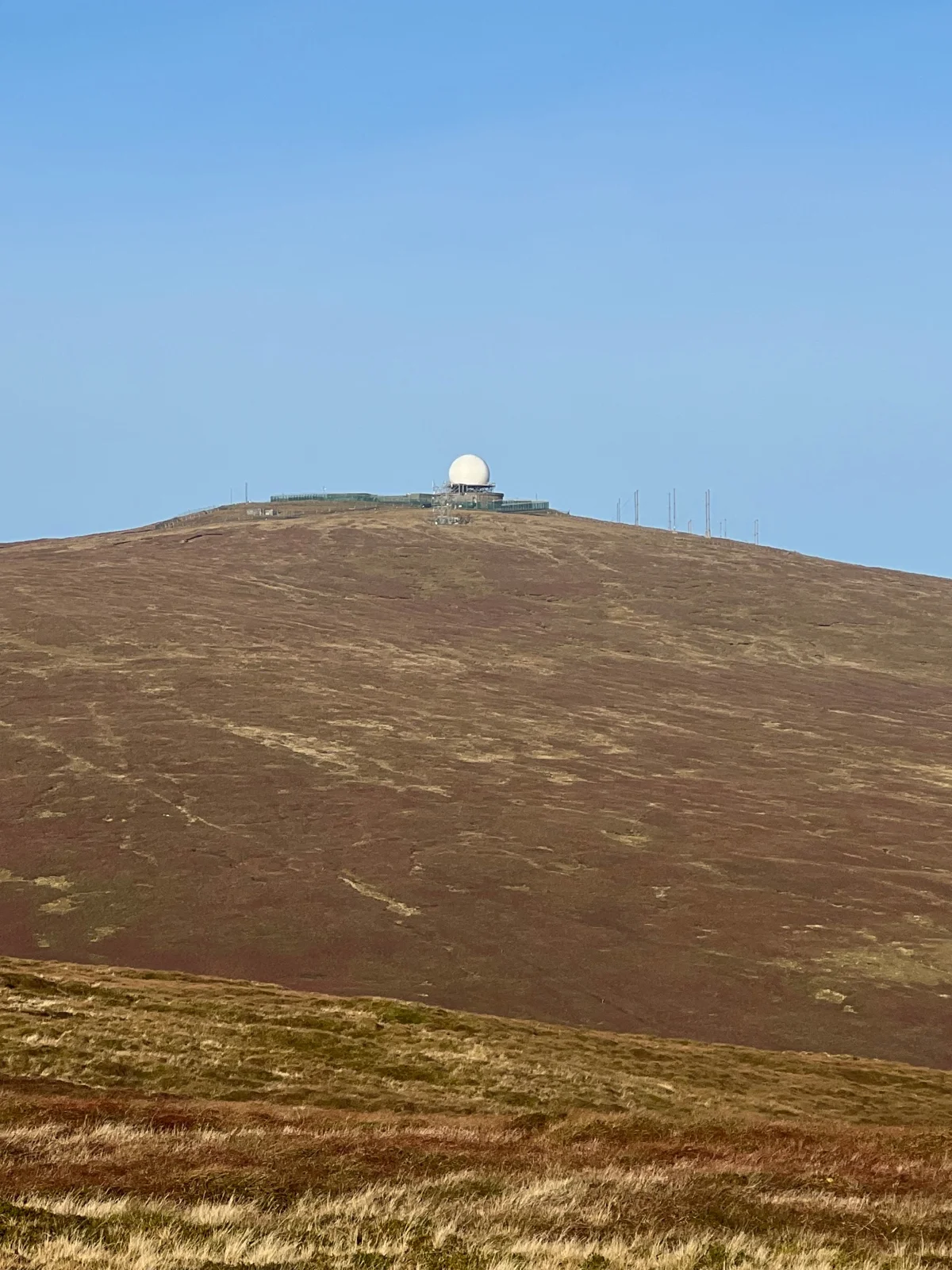
Some projects carry a line on a desk into an unexpected landscape. Work at RRH Saxa Vord opened that kind of door for me: to Shetland, open ground, and a place whose appearance keeps changing with the weather.
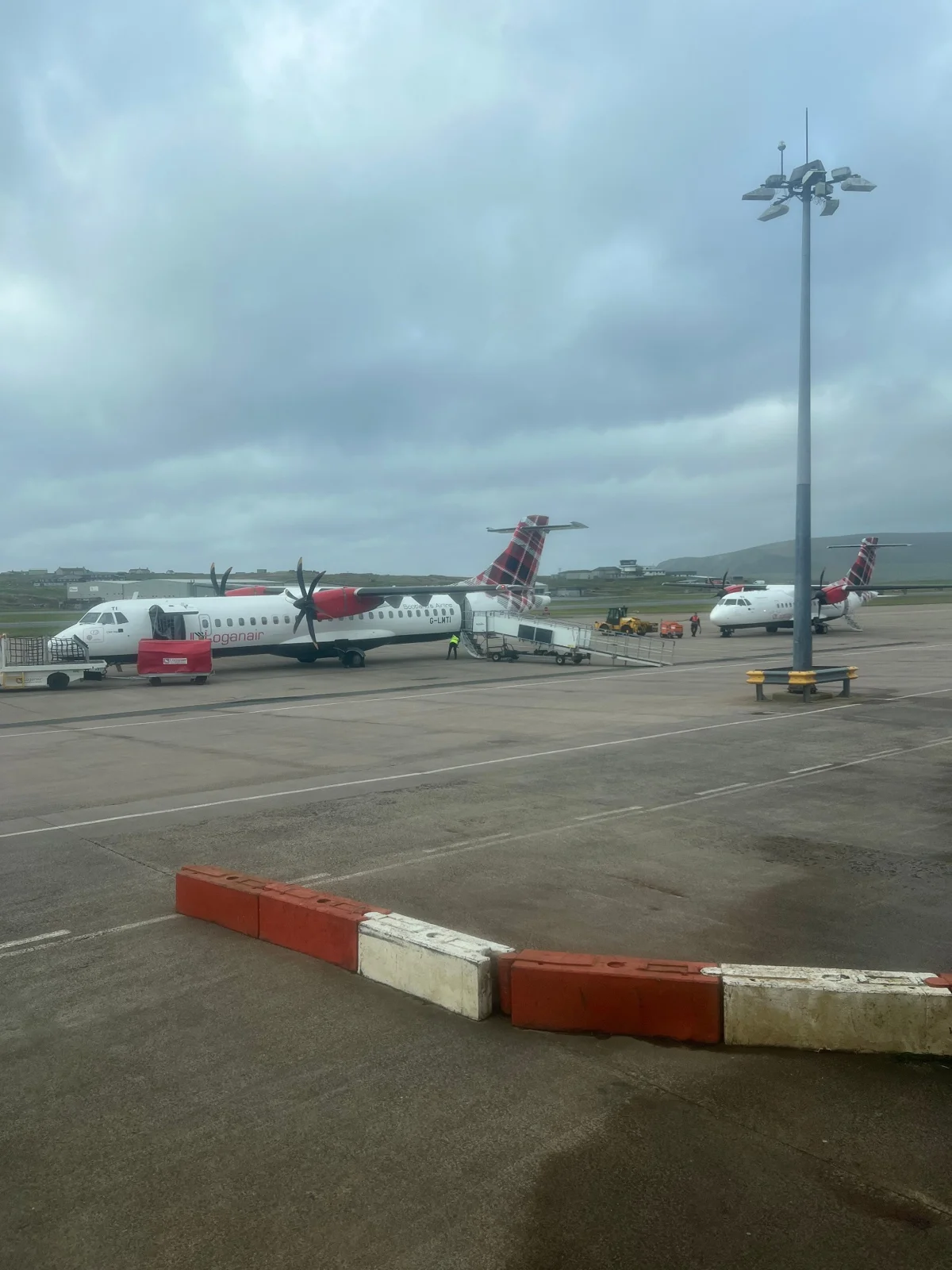
This is an opening journal entry built around photographs from that journey. The professional scope belongs on MOLD Design Lab and PLANEST. Here, I want to make room for the impressions left by travelling, waiting and looking around.
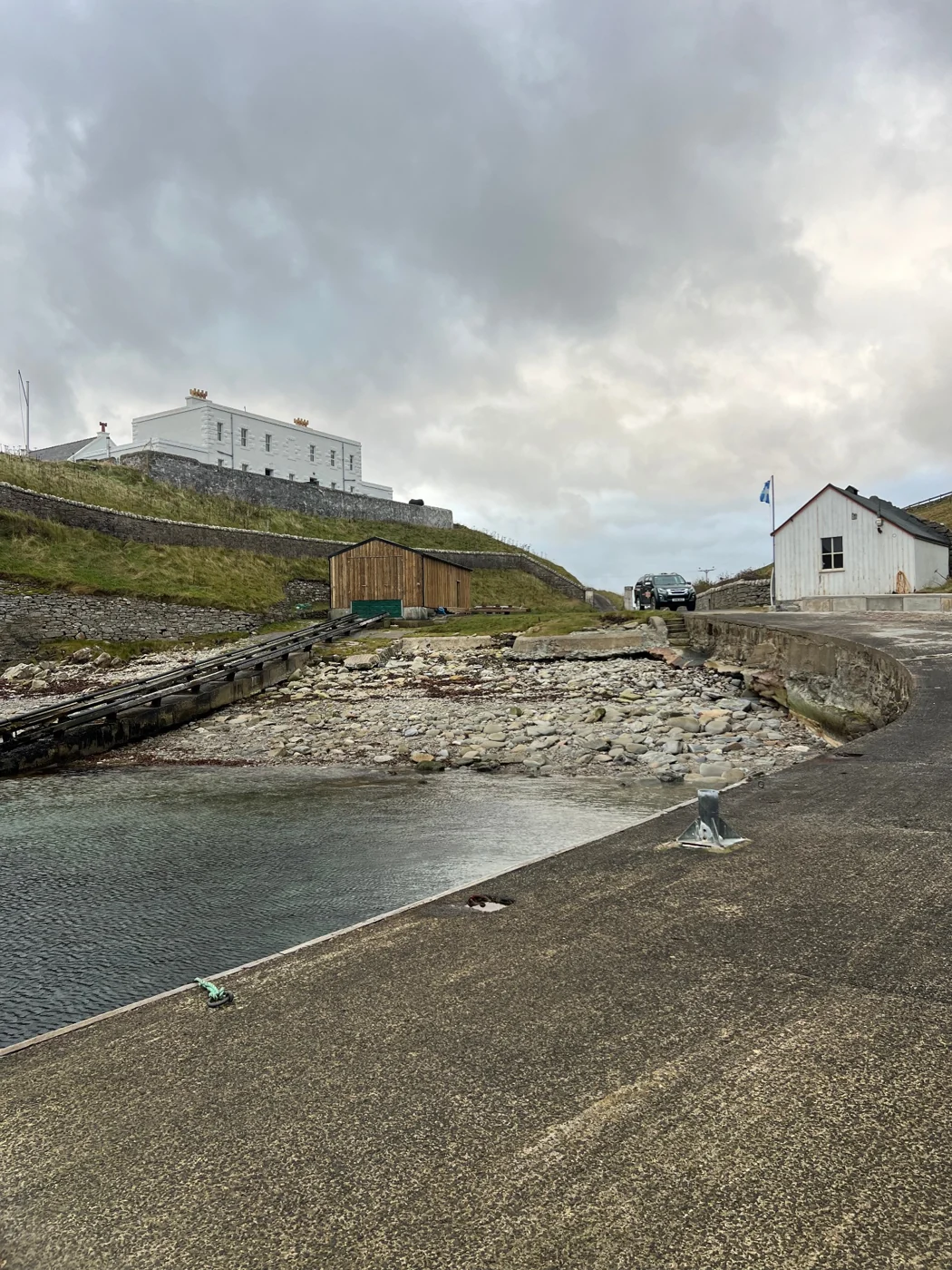
Looking back through the photographs, I notice the sky first. In one image, the white radar dome is clear against the hillside; in another, mist softens the contours of the ground. Two views of the same place. They remind me how a boundary that looks fixed in a drawing changes with light and weather when experienced on site.
Fieldwork involves more than reaching a remote destination. Equipment, measurement, people and recorded information all have to come together. In the context of the 2024 work, my role through MOLD Design Lab was project management and specialist team coordination. PLANEST contributed CAD drawings and technical documentation.
But the project records are not the only things that remain. Aircraft waiting on the apron, boots on the back seat of a car, coffee on a table overlooking the sea: these small images around the work gradually become part of the story of the journey.
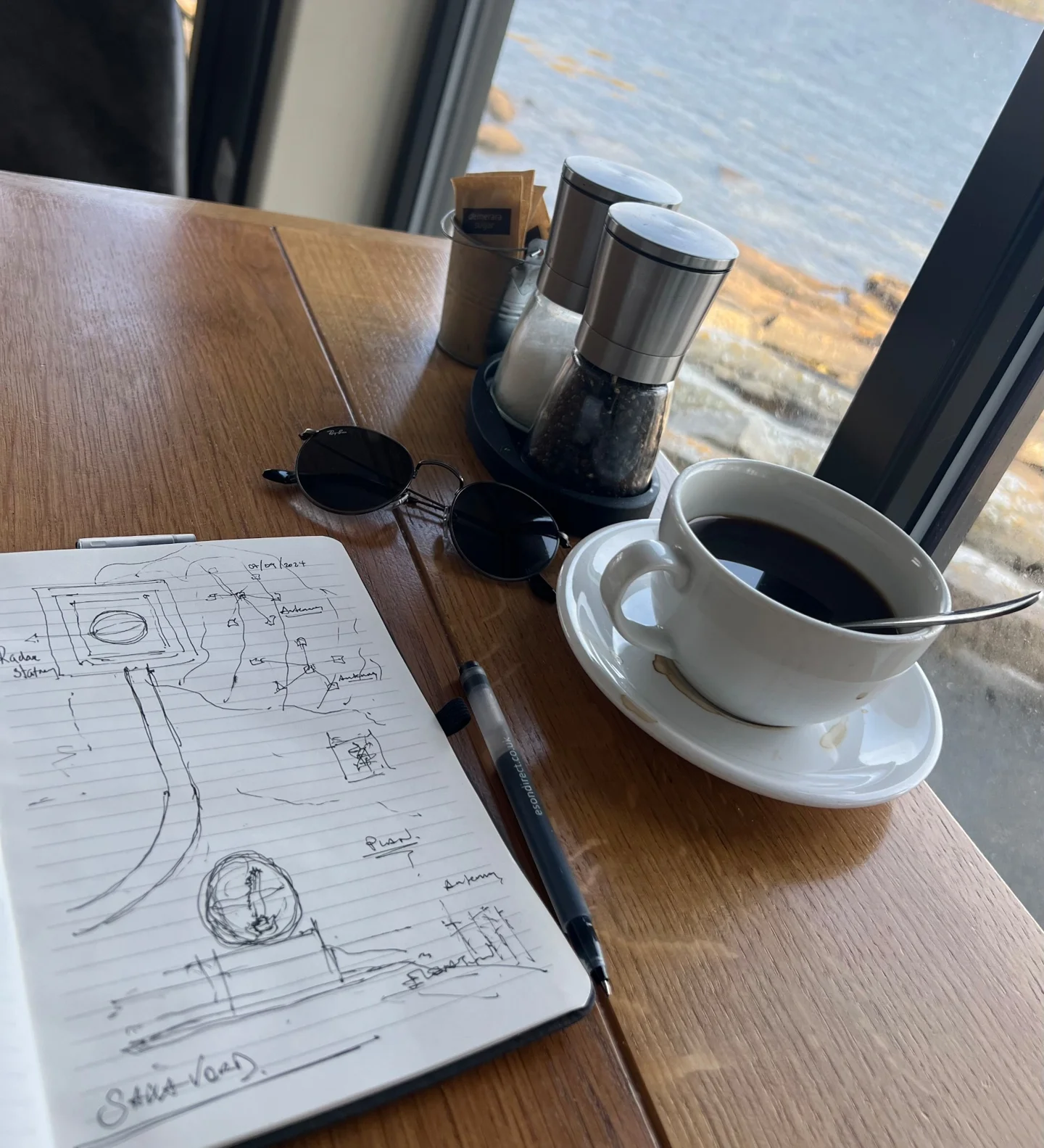
The sketchbook beside the coffee is one of my favourite frames for that reason. Translating what has been seen into lines sometimes begins before returning to the office. A few arrows, a tentative arrangement, a relationship quickly noted down. It is the thinking that comes before a finished drawing.
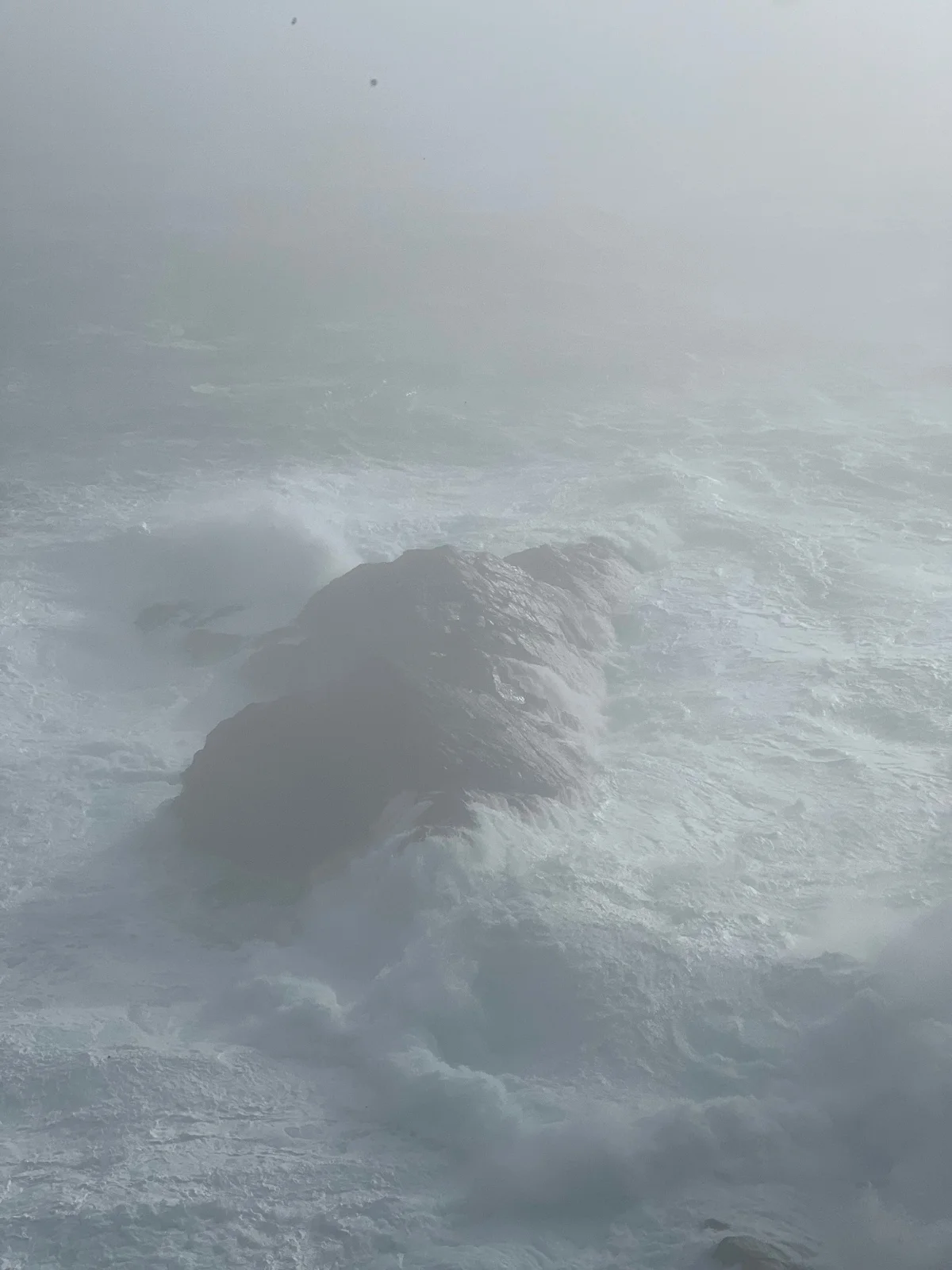
The sea and lighthouse photographs carry a different rhythm. They widen a gaze focused on work, reminding me to see the place beyond the project boundary. I wanted to bring these frames together here, separately from the technical project record.
This entry opens my Shetland notes. Rather than attempting a travel guide, I want to follow how a landscape encountered through work becomes part of the way we think. To pause where a drawing meets the ground, and the ground becomes a drawing again.
Fog, Wind and Traces of Making
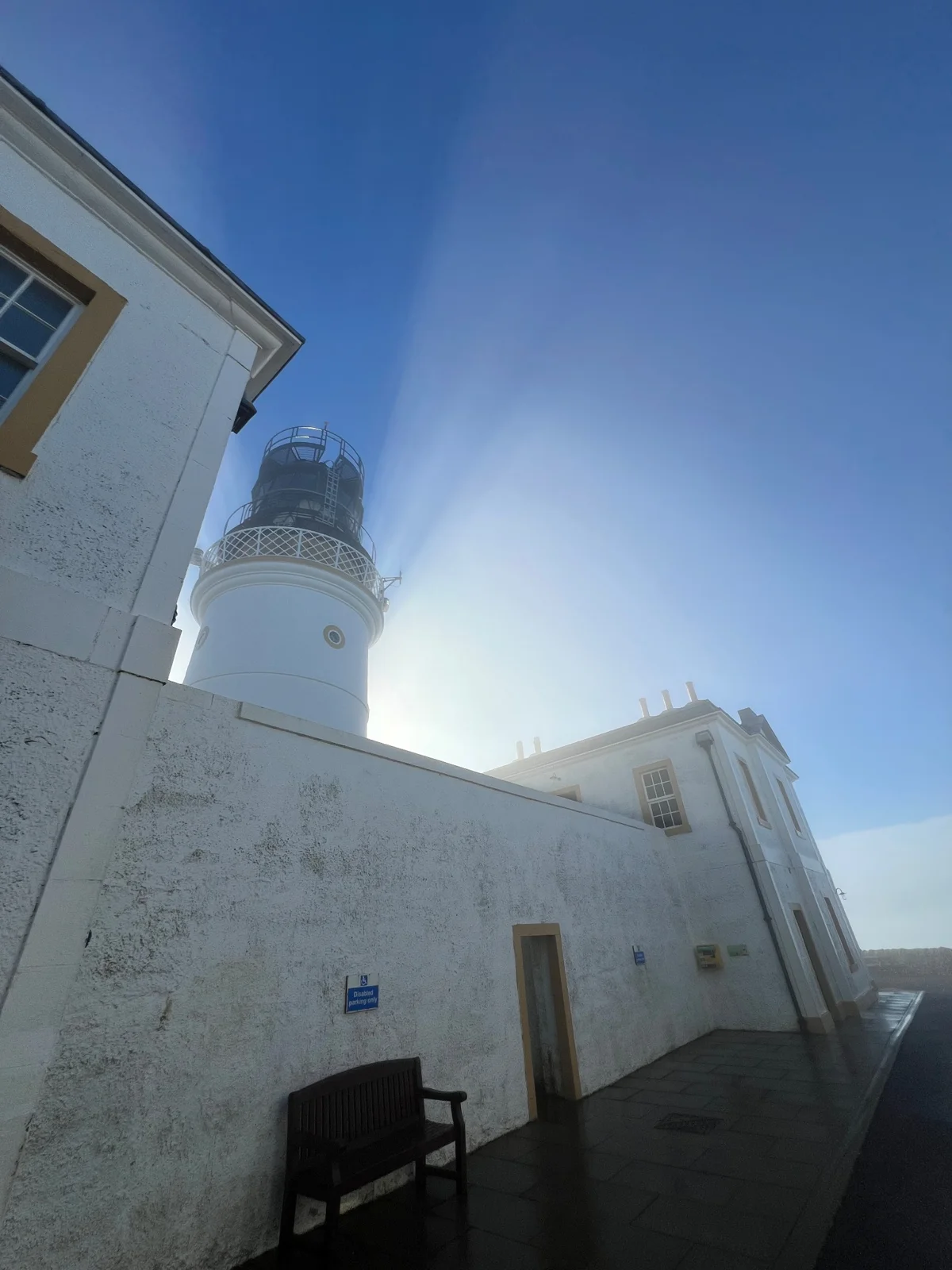
Seen together, the Shetland photographs make fog and wind as present as the buildings themselves. In one frame, a white lighthouse emerges through mist; in another, waves face a stony shore. The same selection includes a small harbour, ponies, a working desk and details of a wooden ship.
I want to read these photographs through different viewing distances rather than as a day-by-day itinerary. Sometimes the subject is a whole coastline; sometimes a joint or an everyday encounter.
What the timber reveals
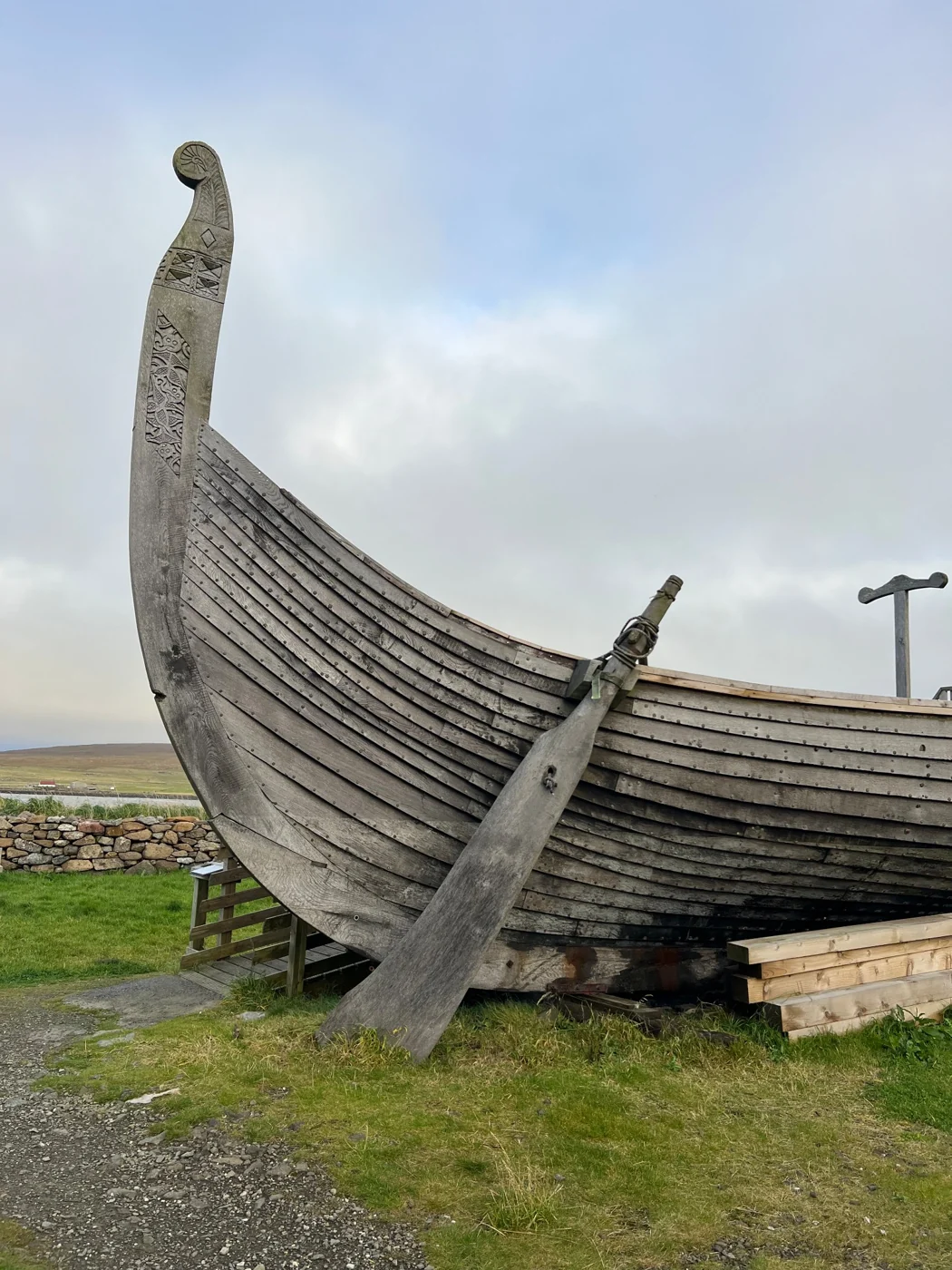
The photographs of Skidbladner show overlapping planks and their connections. The information panel identifies the ship as a full-scale replica of the Gokstad ship. The distinction matters: what I photographed is a reconstruction of historical building knowledge.
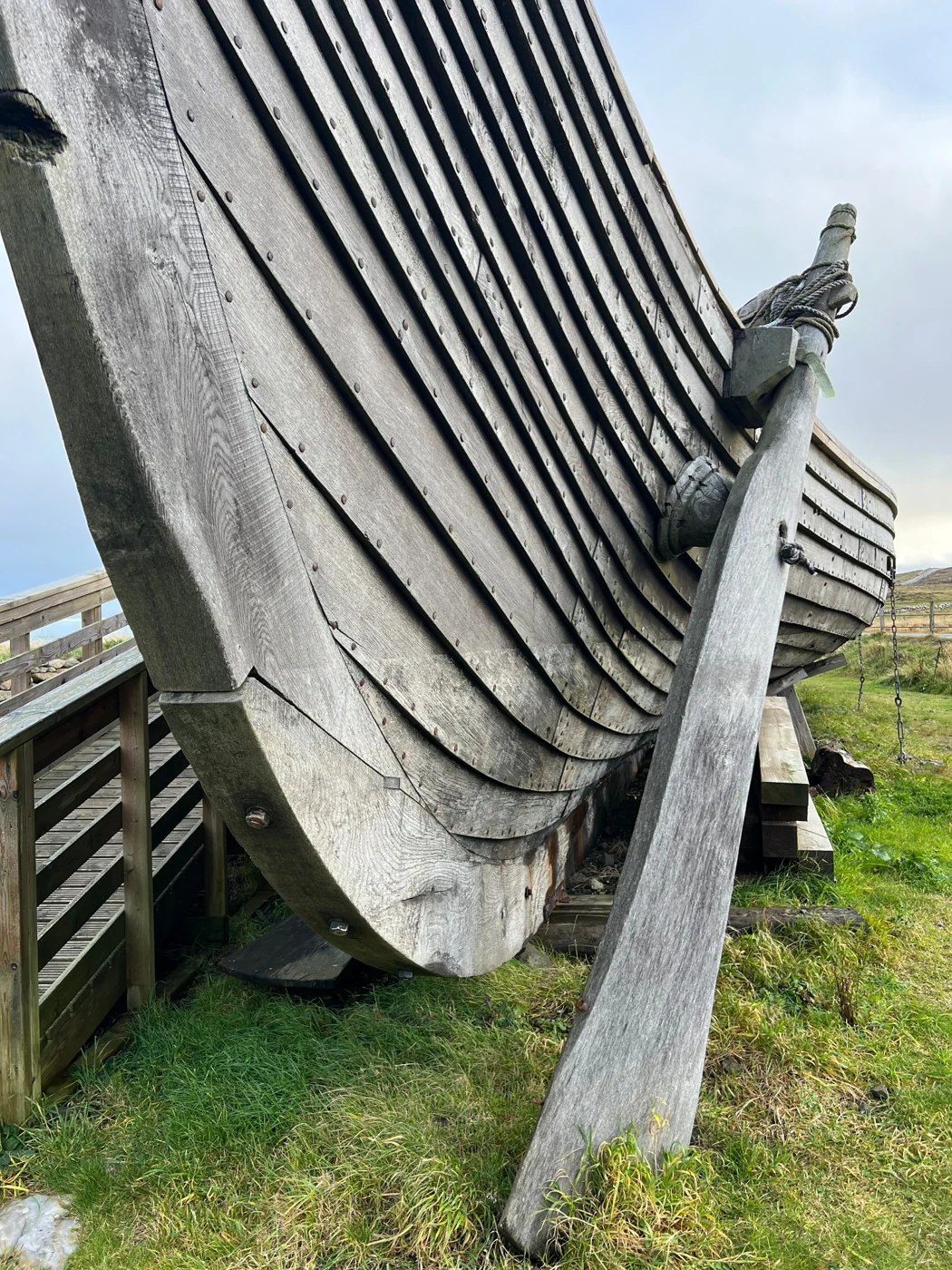
In the close view of the hull, form and making are inseparable. The curve is formed by the arrangement of the planks; the connections contribute to the rhythm of the surface. A relationship that might be described in an architectural drawing can be read directly in the material.
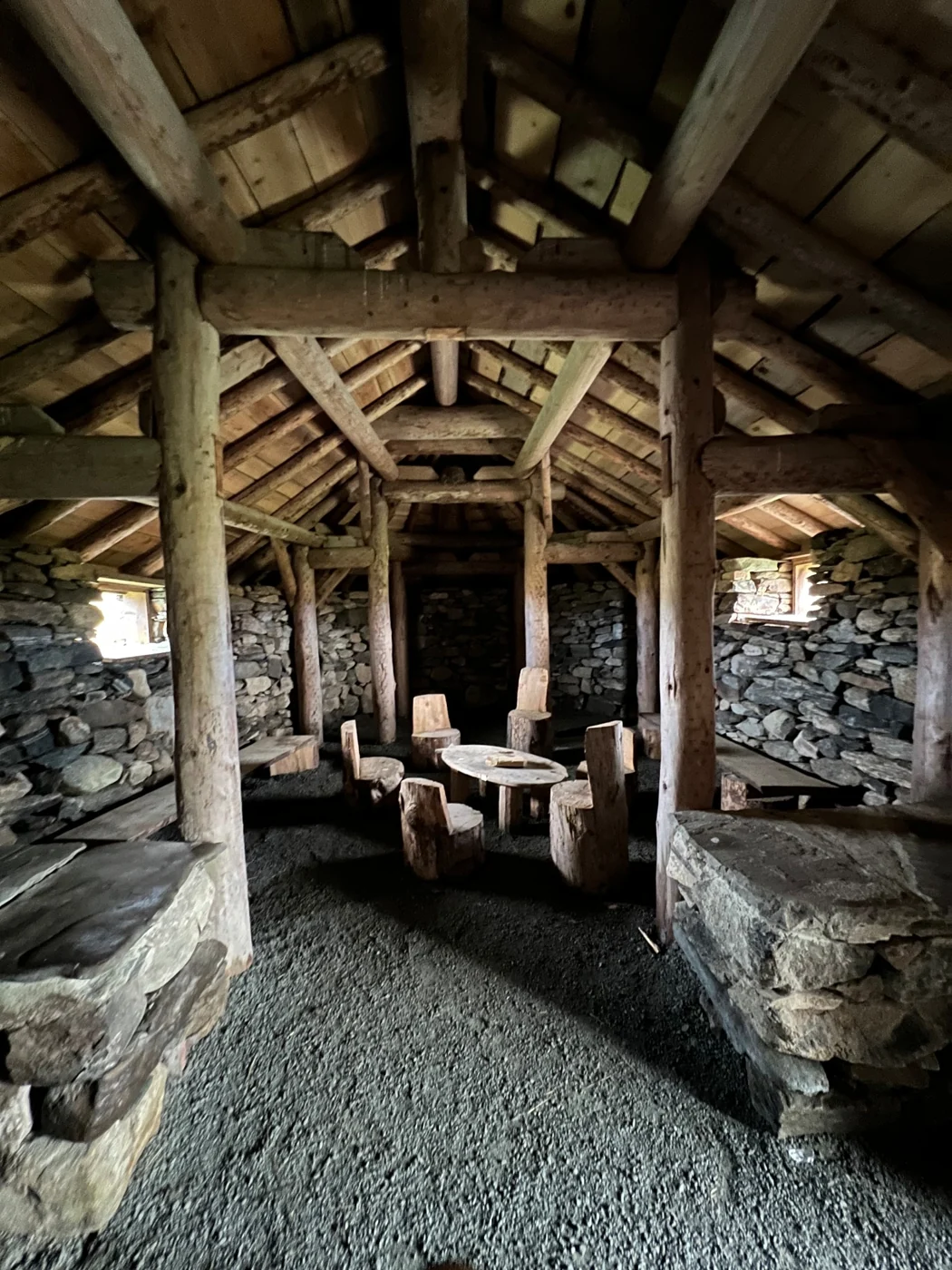
The photograph of an interior with stone walls and a timber structure offers a similar reading. Posts, beams, roof and small window openings are visible together. There is no need to search separately for the structure to understand the space.
Weather and everyday life
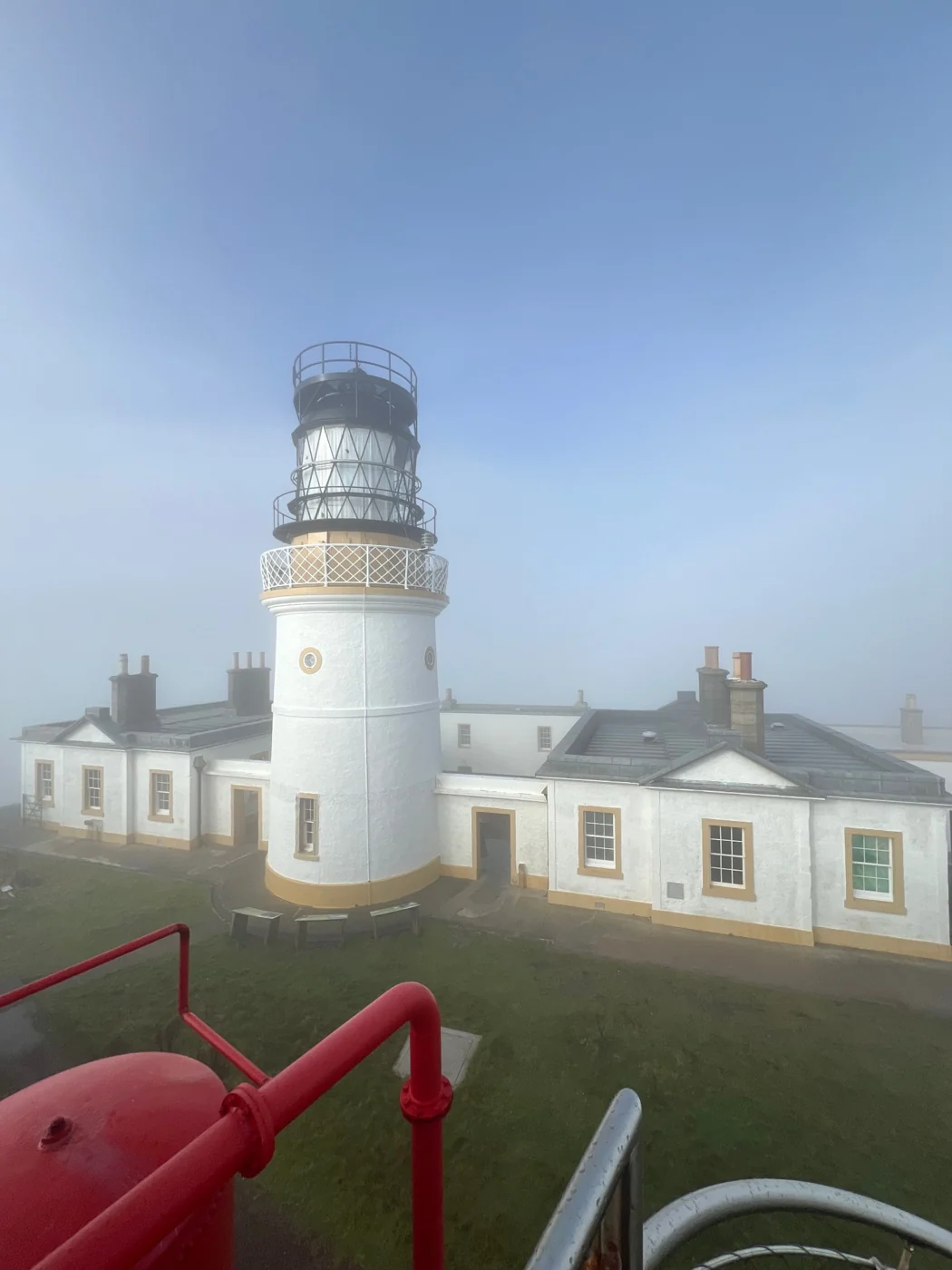
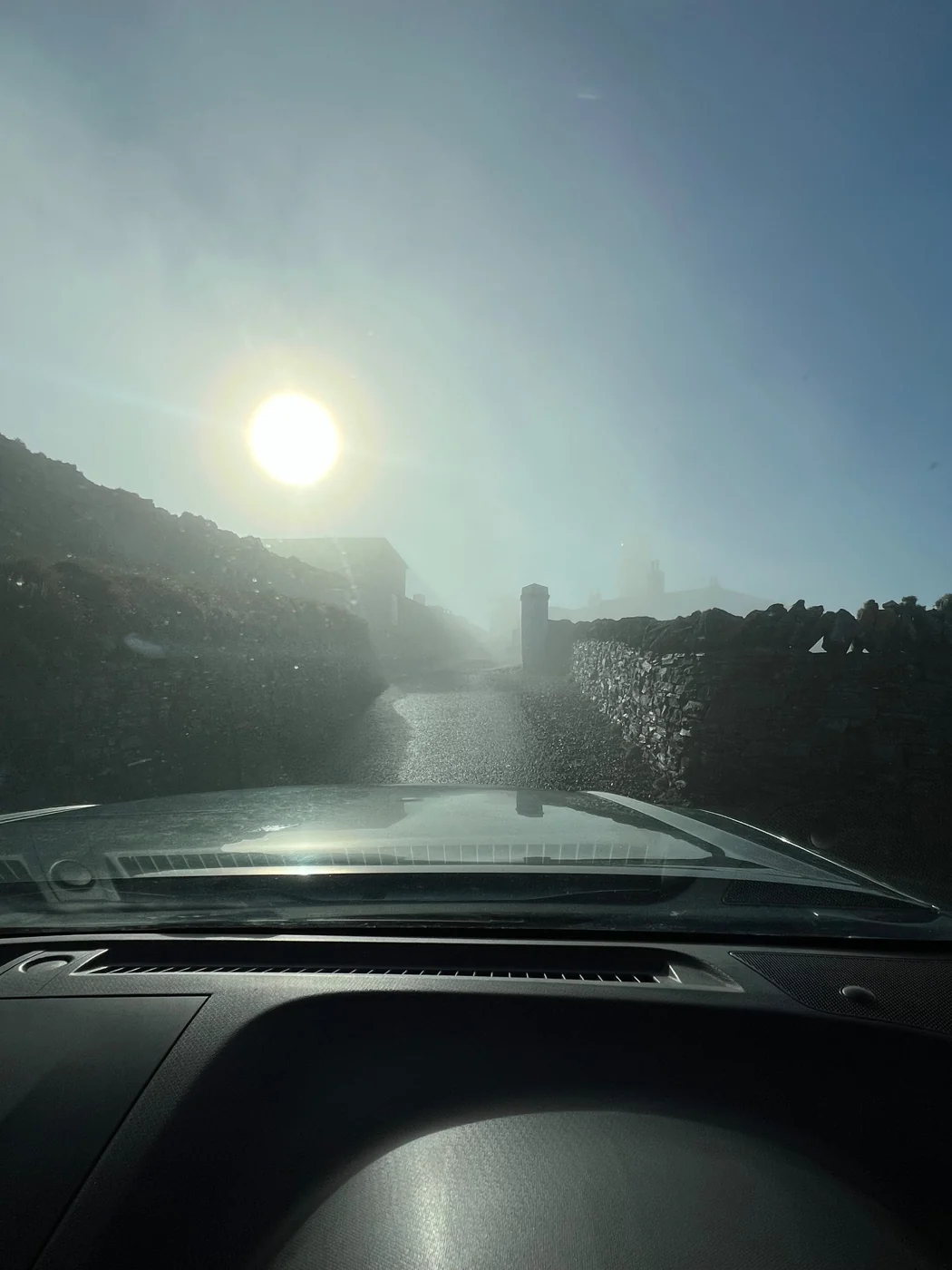
In the lighthouse photographs, fog conceals the horizon behind the building. White surfaces and window surrounds remain visible as the rest of the setting becomes indistinct. In the photograph of a road between stone walls, light also changes the distance that can be seen.
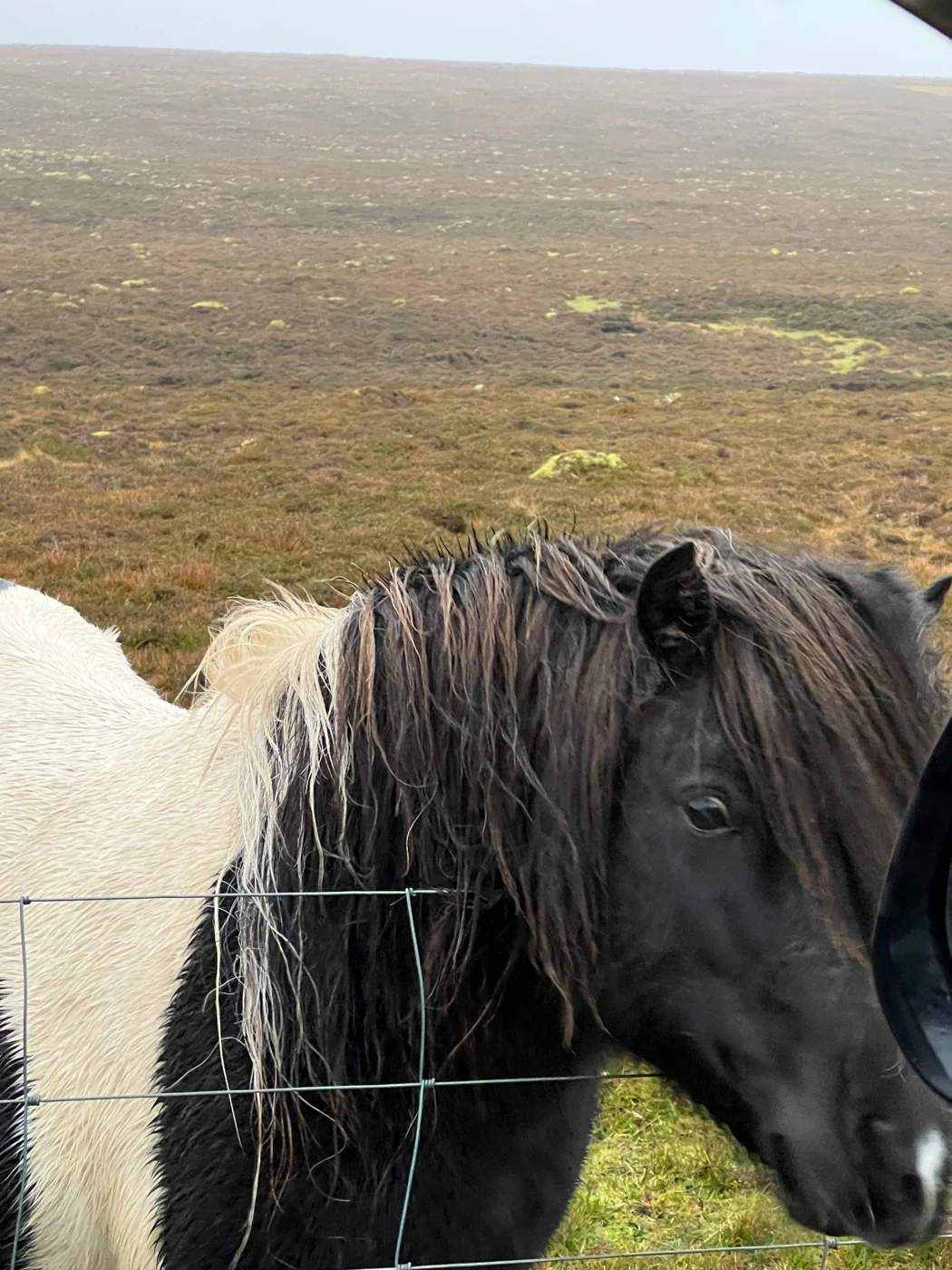
Alongside these larger views are a close photograph of a pony and a picture taken in a café. I want to retain these too. Remembering a place means making room for brief encounters and pauses alongside its buildings.
Returning to the notebook
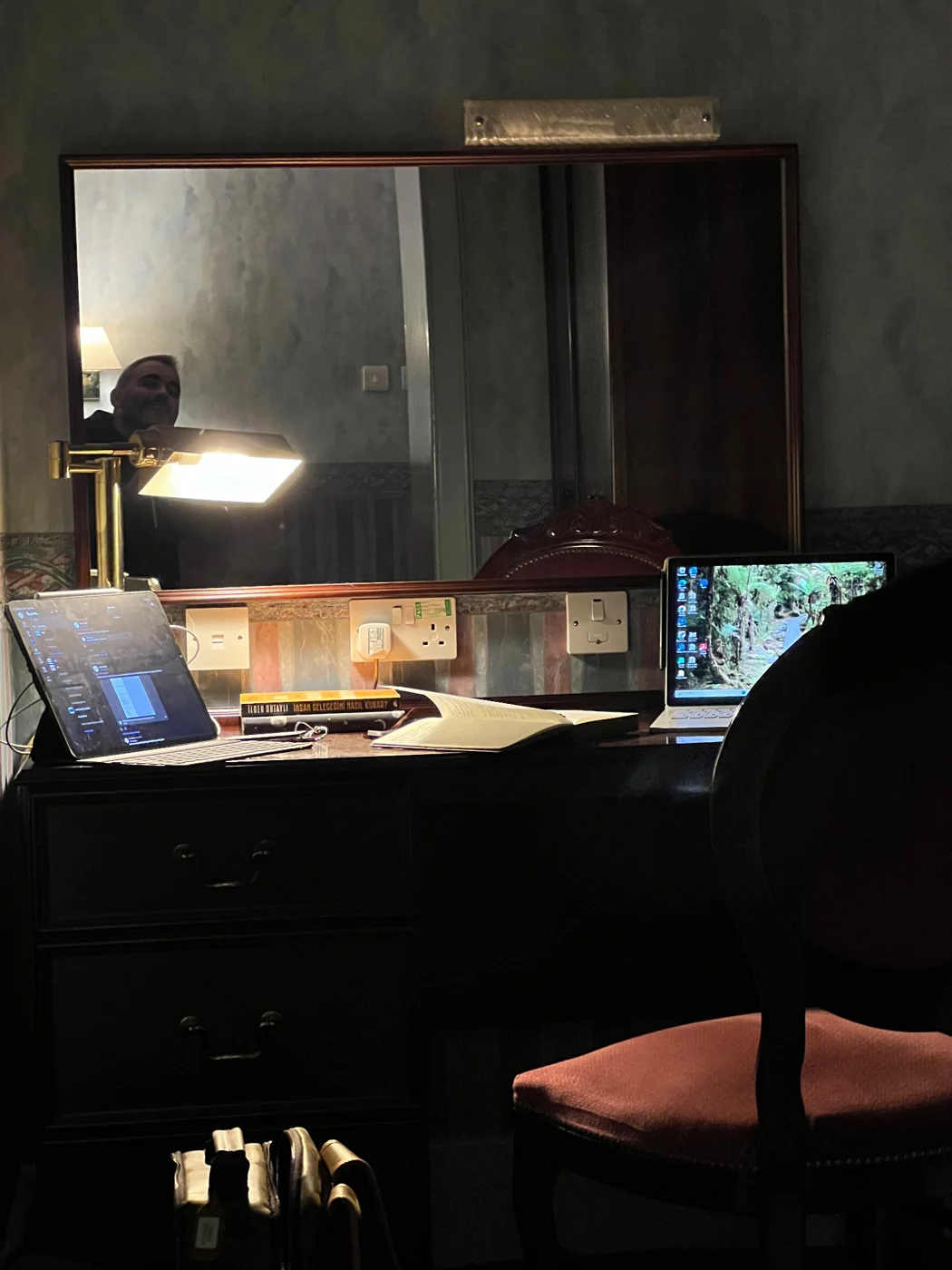
An open notebook, books and screens appear on the working desk. This photograph brings what is seen outside and what is recorded back at the desk into the same account.
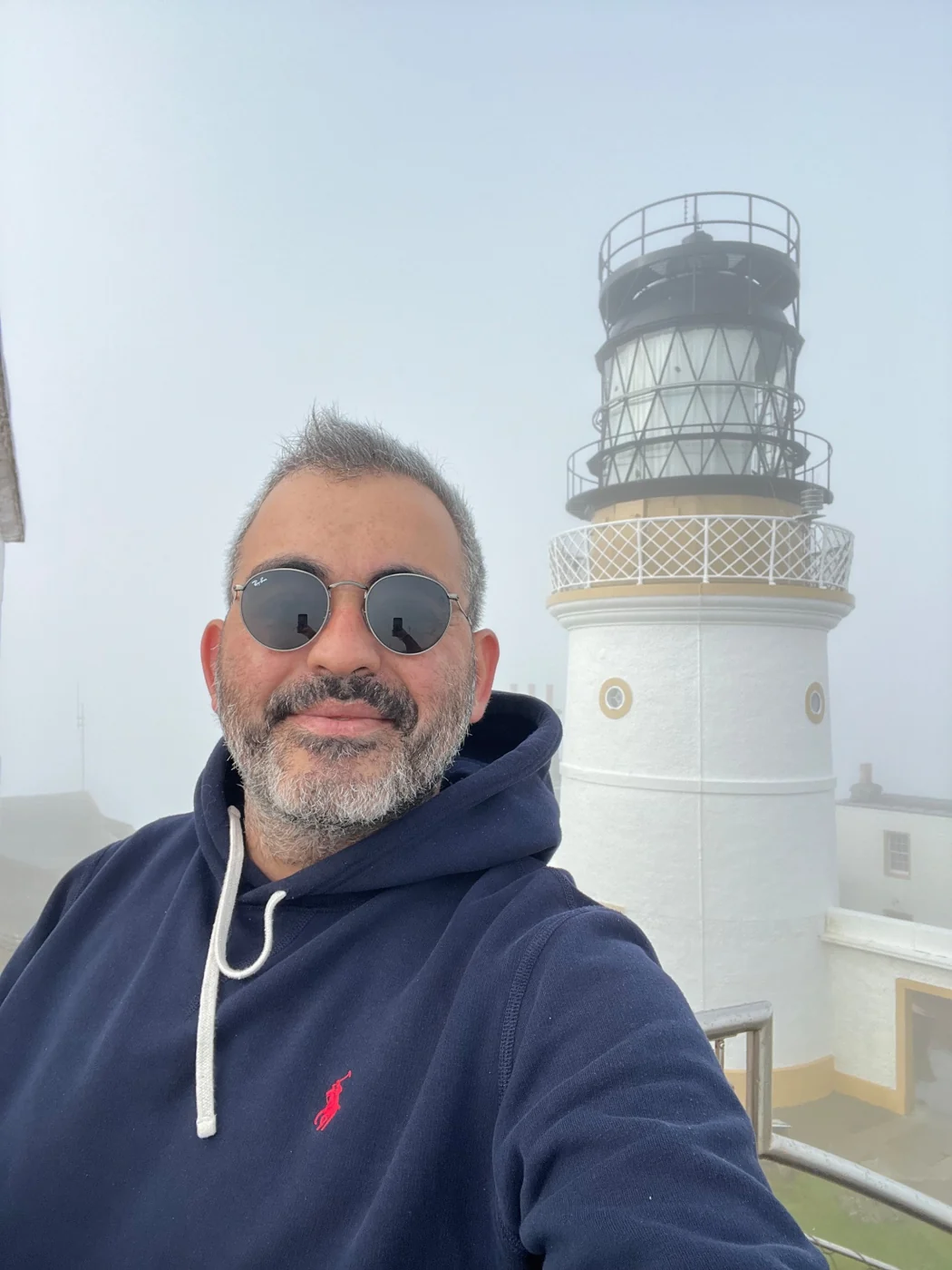
At the centre of this Shetland selection is an attempt to see a place through its details. The ship’s planks, the thickness of a stone wall, a lighthouse in fog and a person facing the coast become notes at different scales in the same journal.
Photographs from the personal archive of M. Burak Tosun.